

Enhancing Patient Understanding through Digital Teach-Back
Wellness
2025
UX Designer
Mobile App
YEAR
ROLE
TYPE
INDUSTRY
TL;DR
Patients often forget or misunderstand medical instructions. Teach-back is effective but time-consuming and stressful, and it rarely scales within clinician workflows.
Problem
Designed a digital teach-back framework and mobile app prototype that delivers instructions in chunks, engages patients with activities, and allows them to “teach-back” digitally at home.
Solution
Team facilitation • Interview protocols • Concept generation
• Prototyping & testing • Presentation storytelling
My Role
Patients reported feeling more confident, less intimidated, and more engaged when learning about procedures like colonoscopy. Clinicians saw the potential for reduced rework and improved patient outcomes.
Impact
40 - 80%
Nearly 50%
Medical information is forgotten immediately
Patients don’t understand their treatment plan correctly, even when they believe they do
At Doctor's Visit
To Understand the problem lets go through a short story
We need to do a colonoscopy procedure to further inspect...
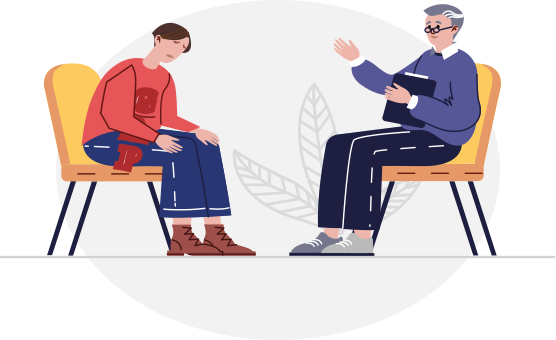

...Do not eat or drink anything red or purple ...
...Drink the "colon prep" liquid You will want to stay home...
Do not eat solid foods after you drink the colon prep....
We need to do a colonoscopy procedure
Information dumped
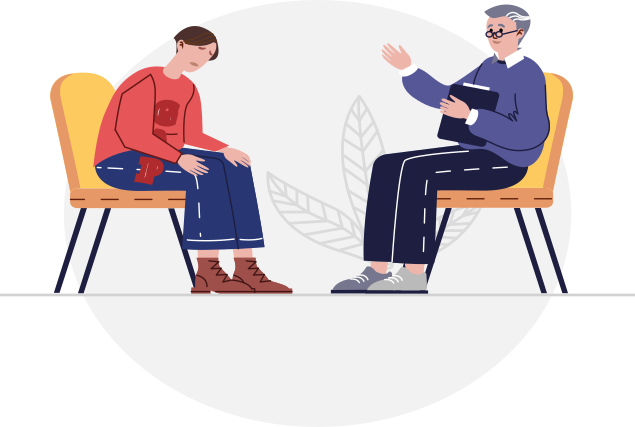
My stomach has been aching for the past few weeks.
Let's try Teach-Back at the clinic
...stay at home because I will have to use the bathroom alot ...
okay, I have to drink colon prep and not eat solid food and umm...

I have thrown a lot of information at you.
Can you explain in your own words what you understood?
75%
Medical information is forgotten immediately
84%
of the time while hospitalized, patients answered corectly
77%
of the time patients give follow up calls
Understanding
the field
Before diving into ideation, we immersed ourselves in the world of healthcare communication. We conducted qualitative interviews with clinicians and patients to understand how teach-back functions today, what enables understanding, what causes breakdowns, and how digital tools might fit within the care journey.
Participants
3 clinicians and 6 patients (ages 34–72)
Methods
Semi‑structured interviews (45–60 minutes), conducted remotely and in person.
Artifacts
Transcripts • Affinity Mapping • Journey Map
All participants expressed a desire for teach-back to scale digitally, yet emphasized the importance of maintaining the human reassurance that makes it effective in person. This insight guided our design direction.
Framework - Turning Complexity into Clarity
After mapping the chaos of medical instructions, we realized we didn’t need another app feature, we needed a learning framework. Something that could flex across diagnoses, yet feel personal for every patient.
Engagement (Why)
Helps patients understand why the information matters by grounding it in their personal health context.
Motivation
Representation (What)
Comprehension
Presents information in chunks, using visuals, transcripts, and interactive content to make learning less overwhelming.
Action & Expression (How)
Retention
The interactive activities will help the user repeat and learn the information by subtly correcting them upon any confusion or mistake.
Why not help patients learn through teach-back at home?
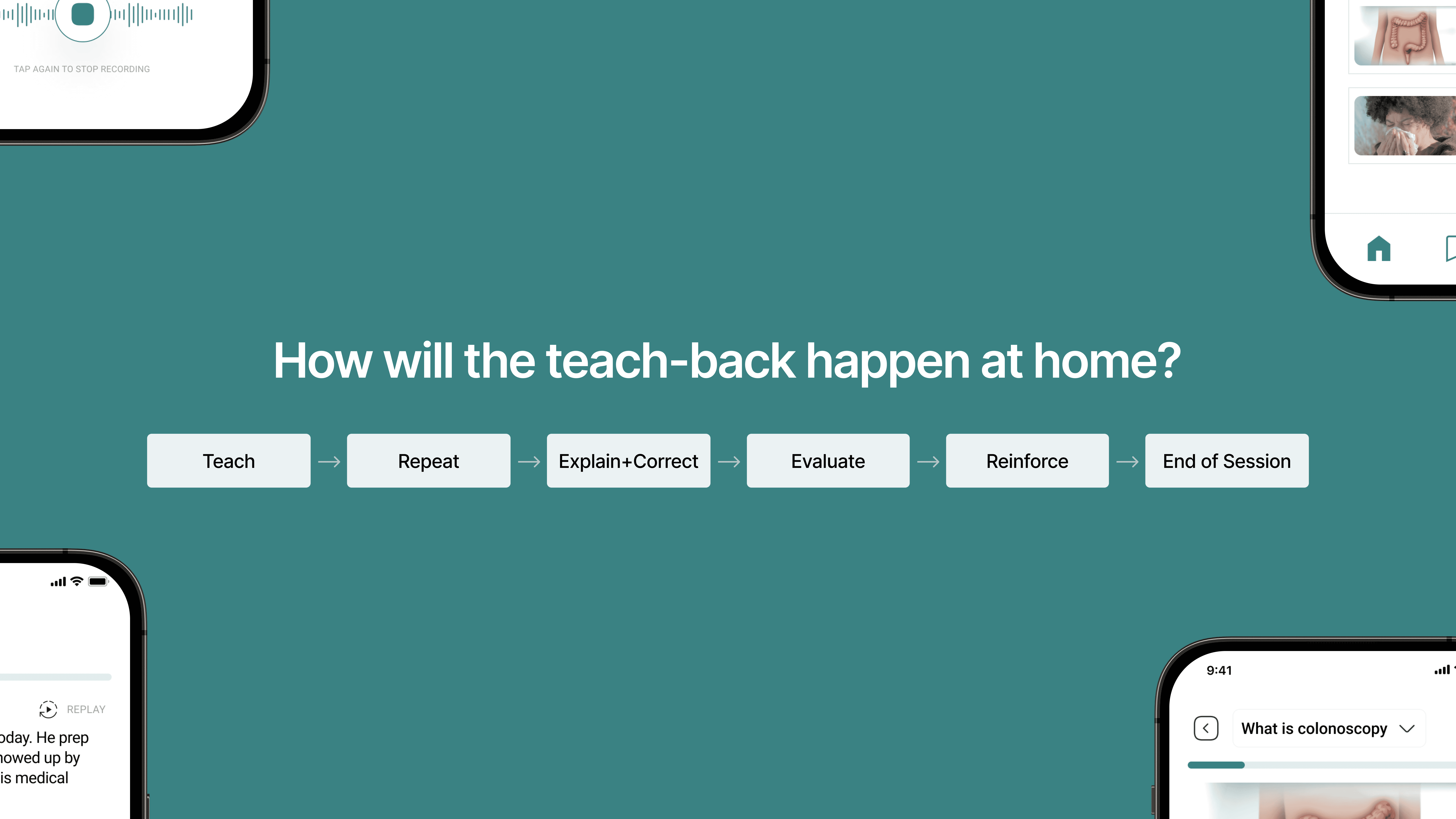
Explain + Correct
Repeat
Evaluate
Reinforce
Teach
Chunking Information
Chunking helps to process information and is one of the techniques for instructional design to reduce overload.
Easing Patients into the Process
By starting with smaller and more digestible info chunks, users don’t feel overwhelmed or intimidated.
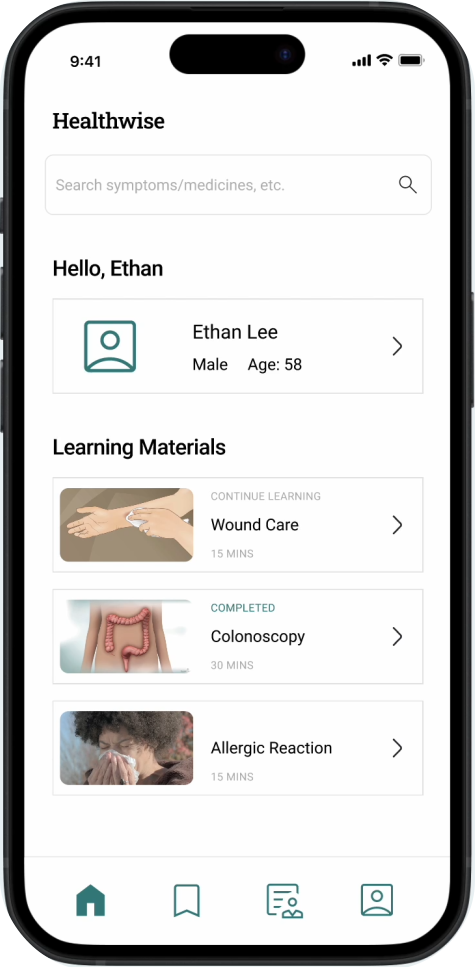
Reduce intimidation through progressive disclosure.
Increase confidence through feedback and repetition.
Support accessibility through visual and textual redundancy.
Design Goals
Final Design